
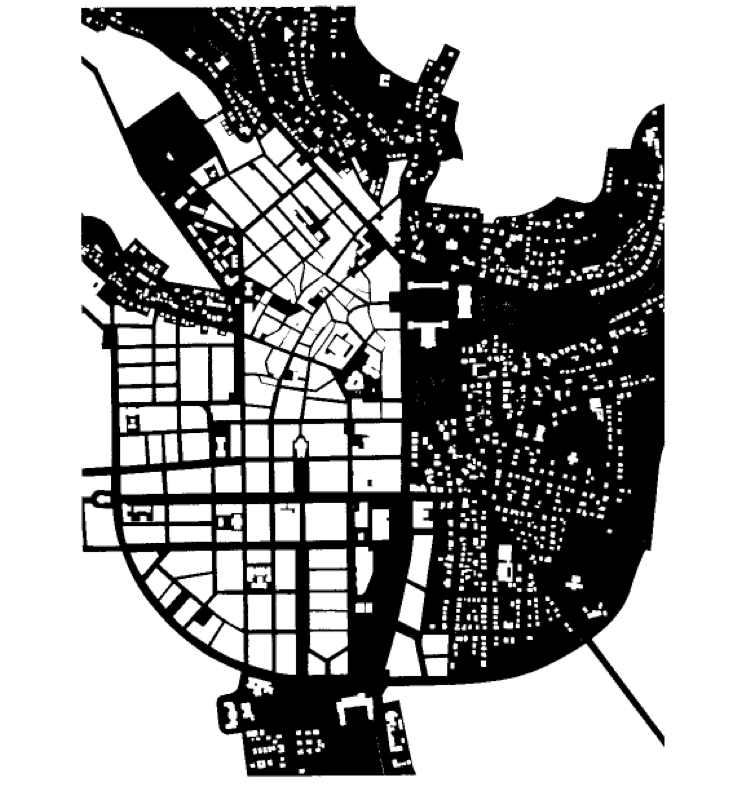
Abstract: This essay explores the rhetorical integrations of race and style in Colin Rowe and Fred Koetter’s urban design text Collage City (1979). Despite being penned in one of the contentious periods of political activity in American history, Rowe and Koetter insist that American democracy cannot be displaced by contemporary forms of social revolution. Having already experienced their revolution in 1776, Americans must instead find a picturesque mode of exhibiting all of the diverging forms of American thought into one harmonious urban fabric. This pictorial representation of a heterogeneous populace comes at the expense of fostering the true revolutionary impulses of countercultural movements in the United States. The most ironic aspect of this conservative vision of democracy is its main illustration: Rowe and Koetter used an image of the black community–one of the the most radicalized and excluded communities of the postwar period–to support their claims. Such an illustration inherently misdirects the reformist impulses of black social movements towards its very containment: it is a conservatives attempt to have the last word against unruly black protest. In an effort to revive this unruly spirit, this essay attempts to give the word back to these oppressed voices by resituating Rowe and Koetter’s Collage City within its historical context to reveal the sleight of hand that takes place within its pages.
Introduction
Today it is commonplace to think of Colin Rowe as one of the leading figures in American architectural formalism to endorse the American avant-garde’s rejection of the social reform that was so central to modernist architecture. What is ironic about this position is that it took shape during one of the most politically tumultuous decades of the postwar period. Rowe’s single minded commitment to the “physique flesh” of modern architecture led him to defend the pure white formalisms of the New York Five as well as support the synthesis of classical and modernist planimetric geometries with his urban design theory of Contextualism. Yet, such a tidy biographical summary tends to remove Rowe from the broader social contexts that marked the late 1960s, the very period that marked the historical emergence of Contextualism.
The second half of this decade produced several social and political upheavals that directly affected the American cities Rowe used as case studies to refine his pictorial brand of urban design. Among the greatest and most persistent themes were the effects of income inequality and racial segregation on inner city neighborhoods. Urban theorists explicitly related the overall health and growth of cities to the mitigation of racial segregation, a discourse that became especially contentious when its proponents discussed the future renovation of North American ghettos. These viewpoints are recorded in texts such as Kenneth Clark’s Dark Ghetto: the Dilemmas of Social Power (1965), Stokeley Carmichael and Charles Hamilton’s Black Power: the Politics of Liberation (1967), Paul Davidoff’s essay “Democratic Planning” (1967), which outlined the social benefits of advocacy planning, and officially sponsored reports by Urban Renewal agencies such as Jeanne R. Lowe’s Urban Renewal in Flux: the New York View (1966).[1] Black Power ideology even made successful inroads into the thinking of architecture students and professors who directly challenged the efforts of slum clearance in the form of studio and thesis projects.
When considered against this historical context, it is not surprising to find explicit references to “black liberties” and the “American Black community” in Colin Rowe and Fred Koetter’s Collage City (1979), the summary text for their theory of Contextualism. However, such references are curious when they are offered as a paradigmatic illustration of the core principles of Contextualism, as shown in the opening quote. Why would Rowe and Koetter use references to black social movements to illustrate the apolitical commitments of their theory of Contextualism? How does the image of social reformist movements for black liberties in the United States serve as the best illustration the architect’s refusal to use material form to promote any type of social reform? This conceptual knot is not so easily untangled without situating Rowe and Koetter’s approach to urban design within the broader historical contexts of the late 1960s.

This essay uses Colin Rowe and Fred Koetter’s textual references to black social movements of the postwar period as a prompt to reexamine the historical import of racial discourses on their theory of Contextualism. I argue that racial discourses of the postwar period had a greater effect on the formation of Contextualism than has previously been noted by architectural historians and critics. In Collage City, the politics of radical black protest serves as a negative counter example to the neoliberal pictorial integration of urban fragments that Rowe and Koetter endorsed as the unifying image of American democracy. The negative function of black radicalism becomes clear when we examine Rowe and Koetter’s theory of democracy against the shifting racial discourses in the late 1960s and 1970s. Toward the close of the 1960s, the paternalist attitudes that professional planners held towards racial minorities began to fuel the public’s resistance to urban renewal policies. A major factor of this resistance was the lack of a democratic process for considering the needs and desires of the user. This forced many planners to begin collaborating with black community leaders, making the outright rejection of black civic protest an untenable strategy as the ’60s progressed.
Rowe and Koetter responded to this historical shift in tactic with their publication of Collage City, although they did so in ways that completely negated the architect’s direct involvement with the reformist impulses of minority groups. Their text provided architects with an aesthetic platform capable of synthesizing complex geometries at the scale of urban renewal efforts, but distanced this model from the tainted racial politics of urban renewal policies. It also offered a political model of democratic design that seemed to incorporate the lessons of “black liberties” without alienating the private and conservative interests that might have the means of funding large-scale urban experimentations. Interpreting Contextualism as a purposeful substitute for urban renewal resituates Rowe and Koetter’s thinking within the Planning debates of their time, providing us with an opportunity to examine the function of its racial politics within the context of changing attitudes toward planning and urban design.

Rowe and Koetter created a visualization of American civic culture during the 1960s and 70s that offered an artificially unified image of American citizenship. This image attempted to repair the fractures to liberalism that resulted from the social protest movements of the late 1960s. The homogenous planimetric treatment of urban spaces represented the desired to construct an imagined coherence for American life that was so elusive in these very turbulent years. In this sense, Rowe and Koetter’s text served as a conservative postscript to the radicalism of the 1960s, correcting what its authors felt were the excesses of the previous generation. However, despite the fact that collage urbanism locked the architect-planner into a pictorial display of difference that avoided immediately redressing the city’s racial politics, the segregated character of American cities often forced racial politics back onto the critical reception of their formalist approach to urban design. For these reasons, Rowe and Koetter’s work must be considered for its textual response to the political ethos of radical and reformist black protest. When interpreted in these terms, Contextualism represents a major theoretical attempt to deal with the radical forces that challenged liberalism by recasting these forces in what we’d now consider neoliberal terms. The direct citation of “black liberties” found in Collage City is a rare, but telling externalization of the implicit racial politics that provided an implicit motivation for Rowe and Koetter’s apolitical vision for formalism in the postwar period.
Several events took place between 1965 and 1969 that provide some precedent for reading Contextualism through the lens of racial politics in the postwar period. Colin Rowe used several opportunities to cast his academic approach to urban design as an aesthetic revision of urban renewal. He debuted the work of his urban design studio in a 1966 exhibition at the Museum of Modern Art entitled “The New City: Architecture and Urban Renewal.”[2] The student team he led focused on Harlem as its site, making this inner city district a laboratory for demonstrating the efficacy of accomplishing a large-scale reconfiguration of the urban field. In addition, Cornell University (the birthplace of Contextualism) went on to see the influence of racial politics directly on its campus during the late 1960s. The campus became the center of media attention when a group of African-American students occupied the student union in order to redress the institutional racism they felt influenced campus governance. The Afro-American Society (AAS) that led this effort did not limit their critique to the university, but also related institutional racism to conditions in the inner city. In keeping with the Black Power rhetoric of the day, members of AAS considered ghettos and slums material manifestations of institutional racism and structural inequality. This critique of racial segregation and urban poverty became a prominent part of student protest movements’ resistance narratives during the 1968-69 academic year. Thomas Wade Jones, a prominent leader in this student protest, went on to enroll as a Master’s student in the Planning School and served as a teaching assistant and Instructor of record in Cornell’s Department of Planning.[3]
Contextualism and Urban Renewal, 1966
Locating a critical relationship between Colin Rowe and Fred Koetter’s theory of Contextualism and the racial politics of the postwar period is challenging considering the self-proclaimed intentions of their architectural research. In volume three of his 1996 memoir As I Was Saying: Recollections and Miscellaneous Essays, Rowe explicitly stated that the work of his Urban Design Studio “was never concerned with the dispossessed and the poor,” but was based on the simple assumption that “all would benefit” from his formalist approach to the city.[4] Yet, despite this disavowal many of the design problems handled by the 1960s Cornell Urban Design studio explicitly dealt with the type of sites that were targets of Urban Renewal legislation. This overlap between urban renewal sites and the geometric potential of Contextualism made it very hard to avoid assessing how each strategy dealt with the racial politics of American cities. It was becoming clear by the late 1960s that many people engaged in planning were becoming “disillusioned with physical redevelopment without social change,” an explicit challenge to the purely physical policy of ‘slum clearance’ that drove Urban Renewal in the 1950s.[5] But the question remained what other alternatives existed. The Museum of Modern Art tried to answer that very question in 1966 with the exhibition “The New City: Architecture and Urban Renewal.” Colin Rowe led a team of six architecture students to prepare a reimagining of Central Harlem. Rowe meant for this experiment to be a debut of his developing theory of Contextualism. However, his pictorial approach to urban design was not yet fully formed in 1966, and this experiment proved to be a crucial test of its full capabilities.
The museum’s Director of Architecture, Arthur Drexler, was determined to be as comprehensive as possible in addressing the contemporary issues of City Planning, all while highlighting the continuity between modern planning and postwar architectural solutions. Perhaps he was acutely aware of how the two introductory essays of the show’s catalogue delineated the oppositional, but complimentary philosophies of postwar discourses. In the first essay Sidney J. Frigand, the former Deputy Executive Director of the New York City Planning Commission, summarized the Planning challenges that emerged in the previous decade of work on the city. He directly addressed the issues of racial representation in the decision making process when he wrote that one of “the newest and most publicized source of pressures” calling for an innovative approach to the city that came directly “from the ghettos of the city.” By Frigand’s estimation, the mobilization of advocates for America’s ghettos was “a voice that will grow louder, not weaker, if we refuse to answer.”[6] Elizabeth Kassler wrote the second essay of the catalogue, entitled “New Towns, New Cities.” Her essay was a historical summary of late nineteenth and twentieth century attempts by architects to fashion comprehensive solutions for new towns and cities. For Kassler, the New Town movement was initiated by Ebenezer Howard’s 1898 text The Garden Cities of Tomorrow. She traced the historical dissemination of Howard’s proposal of satellite towns – which were essentially new settlements that separated residential fabric and industrial uses with a ‘green belt’ of landscaping – to towns like Tapiola Garden City (6 miles outside of Helsinki, Finland), Cumbernauld New Town (15 miles outside of Glasgow, Scotland), and Reston, Virginia (18 miles outside of Washington, DC). She also contrasted the British origins of New Town philosophy with Le Corbusier’s Voisin Plan (c.1925) and Ville Radieuse (c.1929-35), the two models most readily associated with the architectural vision of the ‘tower in the park’; an image Rowe and Koetter rhetorically associated with modernist utopian planning in Collage City.
It is interesting to note that Rowe and Koetter polemically emulated Kassel’s history of modern urbanism in Collage City, pejoratively referring to the legacy of New Town’s as the “Townscape” pastiche in the postwar period, and citing the postwar banalization of Le Corbusier’s urban plans as one source of the slum clearance policies of the 1940s and 50s. Yet, even before 1978, Kassel’s disjunction between New Towns and the ‘tower in the park’ were clear visual motifs in the Cornell team’s contextual response to the Harlem site. The urban solution they proposed successfully depicted the two competing models of urban occupation later recorded in Collage City, “the traditional city of solid mass with spaces cut out, and the city of towers in the park”.[7] While subsequent Contextualist solutions would seek to integrate these two geometries into a third type of hybrid urban fabric, this project suffered from a complete lack of formal integration. The Advocacy Planner and Harvard Professor Richard Hatch criticized this solution’s dramatic introduction of a green belt around the core of historic Harlem, which was demographically black, a strategy that effectively hardened the racial segregation that existed between Black Harlem and Morningside Heights, the location of Columbia University in New York.[8] As Rowe would later admit in As I Was Saying, Harlem proved to be a difficult case study in part because it had a “sociological cross to bear,” a condition he felt was “unfortunate” because it diverted attention away from the conceptual strengths of Contextualism.[9]

In terms of the architectural rationale for the project, there were several features of the Cornell team’s proposal that were later included in the publication Collage City. First, the team looked for a natural relationship between the physical elements of the site and the ideal geometries that an architect could intuit from the city’s current configuration. For example, the team used certain geographic elements to locate Harlem as a discreet area of New York City; the diagonals of 125th Street and St. Nicholas Avenue that sat north of Morningside Heights was one such boundary, as were the northern edges of Central Park and the eastern edges of the Harlem River. Harlem as a whole was further broken down into its Western, Central, and Eastern districts by other local geographic markers; the physical escarpments of St. Nicholas and Morningside Parks established the linear boundary between West Harlem (middle-class neighborhood) and Central Harlem (working-class neighborhood), while Mount Morris Park (now, Marcus Garvey Park) and the Railroad viaduct running along Park Avenue were used to designate the linear boundary between Central Harlem (‘Black Harlem’) and West Harlem (‘Spanish Harlem’ or the ‘El Barrio’). As we can see, these geographical boundaries directly mirrored the class and racial segregation of Harlem as a district in the 1960s, a fact that was never explicitly mentioned in the MOMA show, nor explicitly critiqued anytime thereafter. The Cornell team used these ordinal geometries to break Central Harlem into three vertical bands that they used to partition the site, as they stated in the exhibition catalogue:
Implicit in the site is a division into three zones. Two of them should be developed as “the city in a park”; the third zone has been least interrupted by new housing and still retains the grid plan of the traditional city; its character should be preserved and improved.[10]
A comparison of the urban plan of Harlem before and after Contextualism reveals quite a bit of what could be termed ‘slum clearance’ along the two perimeter zones of Central Harlem, creating the green belt around Harlem that cut if off from the rest of the city.

Since much of pre-contextualist Central Harlem consisted of a good degree of nineteenth century fabric, as was manifest by the Sanborn maps of the area, one wonders why the Cornell team did not invert their solution and extend Central Park directly from the north to the foot of the new stadium they added to the site. This configuration would have forced all of New York to come through Harlem to access the new amenities of the area, instead of creating a museum fragment of Central Harlem that was buffered from its surrounding context by parkland on either side. Considering the class distinctions that existed between West and Central Harlem, and the racial distinctions that separated all three zones of the site, it is hard not to read a racial character to the increased separation that the Cornell team’s solution brought to the site. However, when one considers the sensitivity with which the Cornell team transformed the typical block layouts of Harlem’s nineteenth century urban fabric it is clear that something interesting was beginning to happen at the micro scale. Small neighborhood centers were placed in the back alleys of each block. In addition, certain blocks seemed to reclaim vacant land for more open space. At this smaller scale, certain formal moves did seem to reflect an intimate understanding of the needs of Harlem, although such small moves were also never explicitly explained in the literature associated with the MOMA show.
Some of the most visible critics of Rowe and Koetter’s 1966 MOMA submission came directly from within architectural discourse. As mentioned earlier, architect Richard Hatch, founder of the Advocacy Planning group The Architectural Renewal Committee of Harlem (ARCH), and his peer Max Bond, a Harvard graduate and noted African American architect, were two figures that directly challenged the relevance of Contextualism for American cities. Hatch wrote an essay in 1967 polemically entitled “The Museum of Modern Art discovers Harlem,” in which he criticized the proposal. Robert Stern summarized Hatch’s views this way in the monograph New York 1960:
Hatch questioned the provision of so much space for offices and factories “with midtown only ten minutes away by subway.” He criticized the near-wholesale abandonment of the area’s grid plan, which provided “legibility and accessibility,” and was appalled by the team’s proposal to close 125th Street to crosstown through traffic. He also found the planned reduction of residential density “morally and politically unacceptable,” and felt the project would result in “an upper-middle class semi suburb – a pleasant, high-rent district inhabited by people who are not afraid to walk in sparsely protected parks.” But the real failure of the plan, Hatch concluded, “lies in its lack of comprehension of growth in time, and, hence, its inability to guide us in the incremental activities which would produce a loosening of the grid at a socially permissible cost. Any plan that does not include a satisfactory explanation of the intermediate steps in its achievement must, today, be prima facie suspect.”[11]
As an alternative, ARCH proposed an approach to the city that developed its formal strategies from an analysis of the informal patterns of a “neighborhood’s street-oriented culture.”[12] Though their work was admittedly piecemeal, and like many other advocacy planning initiatives began as an attempt to block what they saw as harmful elements of large-scale urban renewal proposals, the political implications of using quotidian practices and direct neighborhood participation to create design solutions presented a clear alternative to the Cornell submission. It was precisely in these moments of ideological conflict that Rowe and Koetter’s approach to urban design could be seen as fostering an ethical conundrum with relation to exacerbating urban poverty and segregation. This interpretation is ironic, as Collage City has been celebrated in architectural circles for its critical emphasis on postmodern heterogeneity, albeit at the formal level. As a result of these and other critical challenges to Contextualism, Rowe and several of his students were forced to pen a series of defenses in architectural journals of the 1970s, characterizing their approach as an innovative and ethical material practice.[13] Before we examine the grounds of their defense, however, it is important to look closer at the institutional context that fostered the rise of Contextualism; the College of Art, Architecture, and Planning at Cornell University.
Student Protests and Faculty Reactions at Cornell, 1969
Donald Anthony Downs’ recent study of the Cornell ’69 protests rigorously documents the effects of these events on campus governance. However, he has not specifically noted the influence of these events on the Architecture and Planning Schools on campus.[14] This is a notable oversight considering the rhetoric on urban poverty that was associated with black student protests at the university. Several facts suggest that discussions did take place that have not yet been considered by historians. The crisis of Cornell ’69, as it has come to be called, is most notoriously remembered for the day the Afro-American Society (AAS) and the Students for a Democratic Society (SDS) collaborated in their occupation of the student union on campus. However, as Donald Alexander Downs helps us to appreciate, this show of force was the final straw in the year long conflict between the faculty’s commitment to classical liberal arts ideals, the University President’s desire to use higher education to promote minority uplift, and the varying viewpoints of radicalized segments of the student body.[15] During the course of the 1960s as radicalism increased amongst the student body, many of the faculty considered it their job to defend the traditional values of individualism and academic freedom against radical students’ claims that such ideals were operating as a mask to cover over the institutional racism perpetuated by the university. Considering the fact that Black Power ideology offered a strong critique of the institutional forces that contributed to the creation of a black underclass, it is important to note Stokeley Carmichael’s involvement in training the student leadership of AAS in political resistance tactics by the summer before the crisis.[16] Cornell students not only discovered Carmichael’s ideals through training sessions organized by the Student Nonviolent Coordination Committee (SNCC), but they read about and popularized these ideals through their sit-ins and public protests on campus during the academic year of 1968-69.

In the spring of 1969, black students took over Willard Straight Hall for two days in an effort to secure curricular and safety reforms for minority students on campus. Days before the protest, unknown assailants had publicly burned a cross in front of the black women’s dorm on campus, which compounded an earlier attack on three black female students and scuffles with the administration. AAS leaders Tom Jones and Eric Evans had unsuccessfully petitioned for an Afro-American studies program in the fall with then University President James A. Perkins, an advocate of social justice in University education. What made this protest different than most other campus occupations was the presence of weapons on campus. Several students smuggled in rifles and bandoliers into the student union after the first night of occupation because of threats they received while inside. The presence of guns on an Ivy League campus, especially one as isolated as Cornell, provided these events with the kind of media spin that outpaced prior student protests of the period. A photograph of African American students toting rifles and bandoliers was later nominated for, and won the 1969 Pulitzer Prize in Photography. Despite the administrations promises to honor an agreement that was reached with AAS to free the student union, a faculty summit later decided to renege on this decision. In the end, the entire student body of Cornell University was called together to renegotiate the terms of the AAS / administration agreement, effectively subverting the voice of the black minority. Meeting notes taken by Dean Burnham Kelly, a Professor of Planning at Cornell, reveal the fact that the university was bracing for the possibility of a large-scale student protest as early as 1968. This pronouncement was the result of informal meetings held between the Provosts and Deans of East Coast Ivy League schools in response to the disruptive student protests that had taken place at Princeton University.[17] None of these events were ever mentioned within Rowe and Koetter’s argumentation for Collage City, which makes it necessary to produce another postscript that relates Contextualism to the racial politics of the late 1960s.
While Cornell students at large, both in 1969 and today, recognize the historical and transformative nature of these events, Colin Rowe’s personal reflections of this moment betray a sense of reserve and disavowal:
In spite of the hostility to Le Corbusier and Ludwig Hilberseimer, in its early years the studio was still accustomed to long skinny buildings; but this Zilenbau fixation seems absolutely to have disappeared as a result of Paris 1968 / Cornell 1969. But if Paris 1968 must be one of the most crucial twentieth century dates and the Cornell scene a year later must be an entirely minor affair, I should still say that when, after a few months in Rome at the American Academy, I returned to Ithaca in January 1970, it was to an entirely different body of students. A great cultural event had occurred; but the students were not at all hostile. Simply they had become determined that Zilenbau were not their thing; and, from then on, it was to be trad city with trad city blocks […] and so we continued with some change of style and something of that attrition of quality which is always associated with a revolutionary aftermath.[18]
For Rowe, like many other avant-garde architects of the postwar period, the definitive challenge to the architectural establishment had already taken place in the Parisian student riots at the École des Beaux-Arts in 1968. It seems that, at least for Rowe, the AAS student protest, while being “a great cultural event,” had very little influence on architectural discourse because it arrived a little too late to claim any prominence in his mind. Yet, if one looks beyond this insistence on categorically separating literal politics from architectural form, it is suggestive that even Rowe marked this political shift at Cornell University in terms of the stylistic preferences of the students. While he was unwilling to draw any immediate connections, his students seem to be aware of an inappropriate connotation in using certain modernist forms after the events on campus. These Zilenbau forms were directly connected to the German Existenzminimum movement in housing reform. This was the leading edge of CIAM discourses between 1928-30, and it became a powerful image for American City Planners in the interwar period. Cornell students’ rejection of these images in 1969 was an important registration of their collective rejection of any stylistic motif that recalled the divisive politic of urban renewal policies.
Several papers in the university archives give us an indication of what faculty and student attitudes were in the immediate aftermath of student protests. The clearest example can be found in an interview conducted with Oswald Matthias Ungers, the newly appointed Chair for the Department of Architecture in the fall of 1969.[19] Not only did he reveal his outspoken support of the black student protests that occurred on campus, a controversial viewpoint at the time, but he also confirmed that both faculty and students were initially enthusiastic to engage in discussions and reforms to address the issues that were raised by these events. According to Ungers, his experience with student protest in Berlin familiarized him with the potentially disruptive effects of social movements. However, he remained convinced of their necessity for raising uncomfortable issues about representation and power. When asked to comment on the student protests in Ithaca, Ungers was very frank about his estimation of these events:
I saw similar things happening in Berlin, and I would say that the students here have more reasons to do actions like seizing the Willard Straight Hall, [than] the students have in Berlin because there are social and political problems in this country which are more serious than they are in Europe. The question of black and white [representation] and the question of strong reactionary groups, which have very much influence here. There’s a great difference between rich and poor people which you don’t find, for instance, in Germany, whereas the distribution is much more equalized. I see more reason to do direct action here, to make people aware of the problems and to get them out of their splendid isolation and the quietness in which they try to live. Especially with the actions the Black students took to seize Willard Straight Hall. I agree, because I think there is a legal right to minority groups if they have no other way to express their will.[20]
Ungers words echo the sentiments expressed by black student activists on campus the spring before Ungers arrival, and they are nearly diametrically opposed to Rowe’s overestimation of the importance of European events to those taking place in America.
Another important registration of racial politics in the academic culture of the Department of Architecture was manifest during a series of spring and summer travel programs that took place in Chicago and New York in the mid to late 1960s. These trips exposed students to the segregated policies and physical realities of urban renewal. Notes on these sessions reveal a great deal of awareness and involvement from the students in attendance. The New York architect Rolf Olhausen coordinated a trip to Chicago with the help and support of fellow architects Alvin Boyarsky and Bob Gordon, an advocacy planner, in the spring semester of 1968.[21] The trip opened with Boyarsky and Gordon briefing the students on “a number of current projects, including efforts dealing with housing the poor.” After this, they met at the Chicago Urban Renewal Department to ask city officials about their official policies for urban renewal. Olhausen summarized the result of this conversation for Burnham Kelly in his notes on the trip:
Monday we met at the Chicago Urban Renewal Department’s office and received the official P.R. presentation. Some of the students raised a few blunt questions, which led to a rather heated debate. The Department rationalized its existence by maintaining it provided places for middle-class, white American[s] in the central city, thus stemming the exodus. They felt unable to take any initiative or responsibility for housing in the ghetto areas.[22]
The racial and class justifications of Chicago urban renewal efforts is very telling, as it confirms the segregated nature of urban renewal in the postwar period. To supplement student’s exposure to the efforts that were being made in white middle-class neighborhoods, Bob Gordon led students to the Kenwood Oakland area of Chicago, a predominantly black area of the city, to tell them about a community study made by the Kenwood Oakland Community Organization for coordinating neighborhood resources to create a new physical plan for the area. Though he felt the community plan was sharp in its general outline, he thought that it was “very weak as a physical plan.” Even four students from Colin Rowe’s urban design studio engaged in a group project that was designed for another area that had been the target of urban renewal efforts in the 1960s; a North Bronx neighborhood.[23] Bill Evis, Steve Potters, Michael Schwarting, and Jon Stoumen were given permission in the fall of 1967 to make surveys “to extract significant configurations from the existing layout of parks and streets.” Though no record of their student projects were preserved in the University archives, it is clear that trips to inner city regions affected by urban renewal policies was part of the culture of Cornell’s academic program.
Defending Contextualism in OPPOSITIONS and COLLAGE CITY, 1976-78
The architect Stuart Cohen penned a clearly written defense of the social relevance of Contextualism in the architectural journal Oppositions in 1976. Cohen was one of the first few students at Cornell to take Rowe’s Urban Design studio and he helped coin the term ‘Contextualism’ with Thomas Schumacher in 1965. His essay, “Physical Context / Cultural Context: Including it All,” anticipated many of the arguments that Rowe and Koetter would use two years later in Collage City. In Oppositions, Cohen described Contextualism as “an empirical theory” of urban design that primarily dealt with the physical elements of the city. This mention of empiricism is important because Urban Renewal was often spoken of as the result of an empirical process that balanced the needs of the city against existing resources. Despite the physical focus of Contextualism, however, Cohen argued that the lack of sociological methodologies did not make it an unethical approach to urban design:
It was assumed that one could morally operate this way, making decisions that did not relate to many of our urban problems because Modern architecture had already amply illustrated the inability of built form alone to solve problems of largely social or economic origin. These assumptions were not seen as an argument against the need for social relevancy in urban planning and architecture; rather it was felt that other values were also important. These values, largely visual and spatial, were, like a specific design solution, to be intuited from an accepted local context, a site and its surroundings… It was to produce a physical continuity of urban form that, if not literally an extension of the style of the adjacent architecture and urban fabric, would suggest the process of accretion by which the traditional city had developed.[24]
Cohen went one step further than Rowe by admitting that some “need for social relevancy in architecture and urban planning” did exist, although he did not go into detail on what grounds this relationship might be accomplished. Most of his essay detailed how an “empirical” approach to the contextual fabric of the city permitted postwar architects to make clear formal decisions that reconfigured the fragmented urban fabric of their respective cities. Implicit in Cohen’s reliance on the empirical character of existing physical contexts is the notion that a city should be a filled entity. Vacant lots, left over spaces, or derelict districts needed to be filled as blighted areas of the urban fabric. In addition, like Rowe and Koetter two years later, Cohen expressed a clear preference for urban forms that “would suggest the process of accretion by which the traditional city developed.”[25] This preference for the Renaissance model of accretion is an important element to remember as Rowe and Koetter would parallel this physical preference for a traditional conceptual tool; the critical utopias of the Renaissance.
Rowe and Koetter would elevate the empirical assumptions of Cohen’s article into a full-fledged manifesto in 1978, but the most important aspect of this extension was the decidedly political character of their work. According to Rowe and Koetter, only a “Politics of ‘Bricollage’” could guide the architect’s decisions to resolve the geometric collisions of the city’s grids. Their use of the term ‘politics’ then should be interpreted as a regulatory principle that dictated the values of the architect, much like the values of a political party (at least in theory) guides those of its members. By employing the politics of bricollage then, architects would never have to rigidly measure the success of their physical interventions with the complete transformation of the entire city; just like the American system of democracy, a ‘democratic’ principle would regulate the formal interaction of the city’s fragments. Despite the metaphorical nature of their use of politics, there is evidence in Colin Rowe’s early writings that only a liberalist interpretation of politics would do for American architecture. For example, he wrote in the Introduction to Five Architects that American formalism operated completely differently from European formalism in architecture as a result of the stability of American democracy as an ideology. In comparison to the socialist aims of early modern architects like Hannes Meyer and even Le Corbusier, who sought to transform the bourgeois sensibilities of their respective publics, American architecture was shown to have been appropriate from the beginning by the commercial values of society. In a pragmatic tone then, Rowe and Koetter’s theory of Contextualism emulated the behavior of American democracy in order to avoid the terrible misalignment that forced earlier modern architecture to fail. This viewpoint would account for the staunchly “middle-class” character of the Cornell team’s 1966 solution for Harlem, New York.
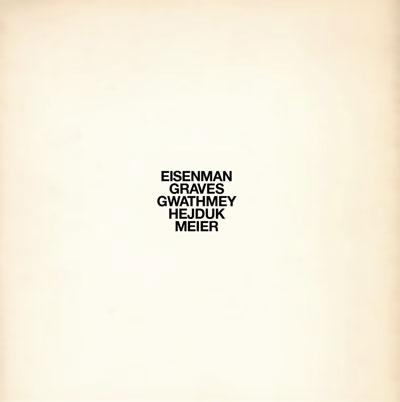
When one interprets the pragmatic implications of Rowe and Koetter’s theory of Contextualism, their proposal consisted of a great degree of capitulation to the existing contexts of American cities. Since a part of this context was, at least for Colin Rowe, the neoliberal biases of American democracy, then his reference to politics went beyond a metaphorical model that directed the architect’s interventions. The contributions of every architect in American society by definition were appropriated by the social values of American liberalism. Knowing that their designs would inevitably work in concert with American values, Rowe and Koetter fashioned Contextualism as a symbolic representation of the very process that relegated the architect to the role of tastemaker. In addition, if the constitution of the urban fabric was thought to implicitly reflect the political consensus of its citizenry, a ‘social contract’ that reflected the values of ‘the Open Society,’ then it was futile for the architect to introduce a new political philosophy in their design work.
The inherent danger of this particular interpretation of American liberalism was that, as an architectural strategy, it ran the risk of perpetuating a ‘tyranny of the majority’ in terms of the stylistic preferences the architect revised for contemporary uses. For this reason, Rowe and Koetter constructed a dialectical image of Contextualism that characterized the sensibilities of the architect-planner as an aesthetic mediator of competing architectural styles. For example, the appendix of Collage City provided a transhistorical (if not fully transcultural) menagerie of urban forms to inspire future architects. These urban forms were of different styles and epochs, although mostly ‘Western’ in focus. Cohen aptly described this pluralist dynamic two years earlier in Oppositions when he said the “issues of site planning dealing with the relationship of one building to another are not seen as prescribing a building’s architectural vocabulary, that is, its style.”[26] Following the explanation of the bricoleur found in Claude Levi Strauss’s The Savage Mind, the architect-planner was depicted as being partly a ‘scientist’ and partly an ‘opportunist.’[27] In interpreting the expanded import that Rowe and Koetter’s neoliberal metaphor for the city it is possible to see how the resolution of conflicting geometries could be symbolically interpreted as an aesthetic resolution of the tensions and disagreements inherent to the history of architecture as represented by the fragments that existed in American cities. What’s more, the very geometry make-up of each city could be interpreted as the direct result of political decisions made by its citizenry, making the literal politics of a city an a priori condition of urban design.
It was in the service of constructing an image of cooperative politics that Rowe and Koetter directly referenced American black politics in their text. This section appropriately appears in the section of the text entitled “Collision City and the Politics of Bricollage”:
But the issue may, and without extravagance, be equipped with a far more literal illustration; and such words as integration and segregation (related to both politics and perception) can scarcely lead us elsewhere than to the predicament of the American Black community. There was, and is, the ideal of integration and there was, and is, the ideal of segregation: but, if both ideals may be supported by a variety of arguments, proper and improper, there remains the evidence that, when gross injustice begins to be removed, the barriers which were formerly maintainable from the outside are just as reconstructable from within […] in spite of the abstract universal goals demanded by theoretical liberalism, there still remains the problem of identity, with its related problems of absorption and extinction of specific type […] It is a history of the open field as an idea, the closed field as a fact; and it is because […] the recent history of black liberties in the United States is so illuminating (and surely so ‘correct’ in both its aggressive and protective attitudes) that we felt compelled to cite it as a classical – perhaps the classical – illustration of a general predicament.[28]

While this reference to “American black politics” primarily served as a representative image of the protracted character of American liberal democracy, the nature of this citation implicitly circumscribed an assimilationist image of black citizenship as the only “proper” illustration of postwar American politics. This characterization implicitly challenged the rights and liberties that were won through violent protests in the 1960s. The delineating boundary that was being drawn between the ‘proper’ and the ‘improper’ forms of minority participation, both political and aesthetic, signaled a neoliberal image of non-violent and cooperative democracy that Rowe and Koetter endorsed in their text. This binary image of blackness recalls the 1966 battle of words with Richard Hatch, who as an Advocacy Planner applied his SNCC training to develop an institutional mechanism to challenge the assumptions of the Cornell submission. Using the ‘proper’ and cooperative image of blackness put forth in Collage City, Cornell’s proposal can be seen as the result of a desire to give blacks the middle-class status that eluded them historically, as well as a drastic attempt to domesticate the physical proximity of newly elevated Harlemites from those Americans already benefitting from middle-class citizenship. If we take Hatch’s 1966 critique into consideration, then the gentrification that would probably result from this proposal would have transformed Harlem from “Black America’s Capital City”[29] into a museum set-piece for consumer speculation.
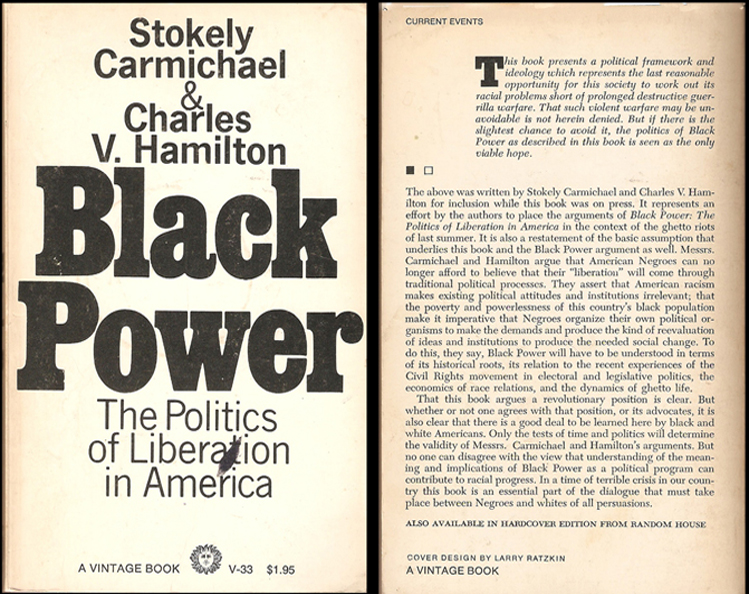
In contrast to the monolithic image of cooperative blackness, Carmichael and Hamilton’s Black Power: the Politics of Liberation was especially influential to the parties described in this essay who opposed the physical and political assumptions of Contextualism. This text is important in this context as it not only provides us with a theoretical counterpoint to Rowe and Koetter’s neoliberal image of American democracy, but it directly influenced the design philosophy of ARCH in the 1960s. Carmichael and Hamilton theorized the affect of ethnic privilege on political representation, which for them was manifest most strikingly by the postwar segregation of the inner city:
Black people in the United States have a colonial relationship to the larger society, a relationship characterized by institutional racism. That colonial status operates in three areas – political, economic, social… Colonial subjects have their political decisions made for them by their colonial masters and those decisions are handed down directly or through a process of indirect rule.[30]
According to this view of American politics, blacks were not free citizens as they did not have the power to make their own decisions or control their own space in America; a situation that was reflected in the organization of the MOMA show wherein no community groups were consulted before any design decisions were made. In a comparative vein then, as Collage City constructed an image of American democracy which assumed that Black American’s already benefitted from the rights of full citizenship, Black Power argued that Black America had yet to attain full freedom from the colonial dependence that prevented them from participating as full citizens. To keep to the parallel between the images of blackness that Rowe and Koetter constructed in Collage City, the ‘improper’ image of blackness that was touted by radical social movements of the postwar period was constructed “from within” the black community. Rowe and Koetter’s attempt to domesticate this ‘improper’ radicalism hints at the fault lines along which their neoliberal assumptions of the peaceful negotiation of “the open field as an idea” and “the closed idea as a fact” were most sensitive to in the late 1960s.
A New Postscript to COLLAGE CITY
After considering Rowe and Koetter’s resistance to inflecting the demands of social justice into their theory of Contextualism, one might assume that their democratic framework for urban design completely circumscribed their potential to directly address the physical reality of minority communities. However, a closer examination of the aesthetic techniques associated with Contextualism reveals a latent potentiality that dovetails with postwar efforts to interpret and subvert the physical effect of racial politics on the city. This potential was manifest in Rowe and Koetter’s discussion of the ideological functions of utopia in Collage City. The drew a contrast between the heuristic function of the Renaissance “classical utopia” as “didactic illustrations, to be apprehended not so much for themselves but as the indices of a better world,”[31] and the literal projections of the post-Enlightenment “activist utopia,” which was “seen as a vehicle for the literal deliverance and transformation of society as a whole.”[32] According to the arguments forwarded in the text, the classical utopia historically provided the architect with a powerful aesthetic means of representing and maintaining the conceptual relationship between a city’s collective politics and the physical transformation of the urban environments. The only proviso on this relationship was that it was best maintained when it was engaged as a conceptual exercise:
And, instead, if one chooses to inspect it, the classical utopia will offer itself largely as an object of contemplation. Its mode of existence will be quiet and, maybe, even a little ironical. It will behave as a detached reference, as an informing power, as rather more of a heuristic device than any form of directly applicable instrument… As with the advice of Machiavelli, the ideal city of the Renaissance was primarily a vehicle for the provision of information to the prince; and, as an extension of this, it was also an agent for the maintenance and decorous representation of the state. Social criticism it no doubt was: but it still offered not so much a future ideal as a hypothetical one.[33]
The full consideration of what the renovation of the classical utopia might have meant for the theory of Contextualism brings us full circle with the Harlem, New York show of 1966. For if, as Rowe and Koetter seem to suggest, one should not take every urban design proposal as a literal projective plan for the city, but instead as a heuristic means of representing its political possibilities, then the Harlem show was just as much about what the Cornell team believed America should look like as what it was a demonstration of what it was physically capable of becoming. Using this logic, the analytical techniques of Contextualism could easily have been employed as a form of site study capable of revealing the concomitant relationships between race and place embedded in the geometries of the postwar city. A brief comparison of three site study maps taken from Rowe’s Urban Design studio (Buffalo, New York; c.1969) with the aerial photo of Harlem included in MOMAs 1966 exhibition might permit us to see the latent potential of Contextualism for revealing the rhetorical integrations of race and geometry. Another diagram taken from the 1969 studio visualizes the morphology that results from the political and geographic factors that delimit a city’s boundaries.
Rowe and Koetter’s interpretation of the city as a grid of confluent forces, both geometric and political, might possibly exceed the historicist and formalist associations typically attributed to their work. In their attempts to sidestep the architect-planner’s literal engagement with politics, they were forced to read the city’s configuration as the accumulated result of social, political and architectural decisions. Ironically, their interpretation of the city as an urban field of political relations not only permitted the neoliberal architect to read the political values of its configuration, but it implicitly permitted more radically oriented players to critique this same idea. While not endorsing a return to Contextualism, this essay reads an implicit radical potential in the aesthetic techniques associated with its practice. Teasing out the full implications of this technique will require situating the themes and proponents of Collage City more fully into the postwar context of the 1960s.
ENDNOTES
[1] Paul Davidoff. “Democratic Planning,” Perspecta, vol.11 (1967): 156-159
[2] The New City: Architecture and Urban Renewal (New York: MOMA, 1966)
[3] See the Introduction to Thomas Wade Jones’ thesis, “Monitoring the Progress of Locally-Operated and Federally-Funded Social Action Programs,” Cornell University, 1972.
[4] Rowe, Colin. “Introduction,” As I Was Saying: Recollections and Miscellaneous Essays, Volume Three: Urbanistics, edited by Alexander Caragonne (Cambridge, Mass & London, England: MIT Press, 1996) pp.2-3
[5] The New City, 4
[6] The New City, 4
[7] Robert A. M. Stern, Thomas Mellins and David Fishman (eds), “Harlem and Upper Manhattan,” in New York 1960: architecture and urbanism between the Second World War and the Bicentennial (New York, The Monacelli Press, 1995), p. 860
[8] Richard Hatch, “The Museum of Modern Art Discovers Harlem,” Architectural Forum 126 (March 1967): 38-47
[9] Colin Rowe. As I Was Saying: Recollections and Miscellaneous Essays, Volume Three: Urbanistics, edited by Alexander Caragonne (Cambridge, Mass & London, England: MIT Press, 1996), p. 88
[10] The New City, 24
[11] New York 1960, 860
[12] New York 1960., 859
[13] See for example, Stuart Cohen’s essay “Physical Context / Cultural Context: Including it All,” reprinted in Oppositions Reader, edited by K. Michael Hays (Princeton Architectural Press, 1996), pp.65-104
[14] Donald Alexander Downs. Cornell ’69: Liberalism and the Crisis of the American University (Ithaca, London: Cornell University Press, 1999)
[15] Cornell ’69, 45
[16] Cornell ‘69, 66
[17] Burnham Kelly papers, folder xxx
[18] As I Was Saying, 3
[19] Sarah Diamant interview, “Challenges to Governance,” Folder K-107-E-1-A, Box 19 (dated 22 July 1969)
[20] “Challenges to Governance,” 5-6
[21] Memo from Rolf Olhausen to Burnham Kelly, dated April 30, 1968, re: Trip with Cornell students to visit the city of Chicago and its environs. Burnham Kelly papers, Box 45, Folder entitled Visiting Critics, Architecture, 1967-68
[22] Ibid
[23] Memo from Colin Rowe to Dean Burnham Kelly, re: Graduate Studies in New York, dated October 2, 1967. Burnham Kelly papers
[24] Cohen, 67
[25] Ibid
[26] Cohen, 67
[27] Collage City, 104-5; We have preferred Levi-Strauss because, in his discussion, with its emphasis on making, it is far more possible for the architect to recognize something of himself. For, if we can divest ourselves of the deceptions of professional amour proper and accepted academic theory, the description of the ‘bricoleur’ is far more of a ‘real-life’ specification of what the architect-urbanist is and does than any fantasy deriving from ‘methodology’ and ‘systemics’… The savage mind of the bricoleur! The domesticated mind of the engineer/scientist! The interaction of these two conditions! The artist (architect) as both something of a bricoleur and something of a scientist! […] this is only once more to intimate the role of ‘bricollage’ which politics so much resembles and city planning surely should.
[28] Collage City, 116-117
[29] New York 1960, 857
[30] Stokeley Carmichael and Charles Hamilton, “White Power: the colonial situation,” Black Power: the Politics of Liberation (Vintage Edition, 1992), 6
[31] Collage City, 11
[32] Collage City, 15
[33] Collage City, 4

 Race & Architecture